
Why desk yoga for corporate employees belongs in the workday
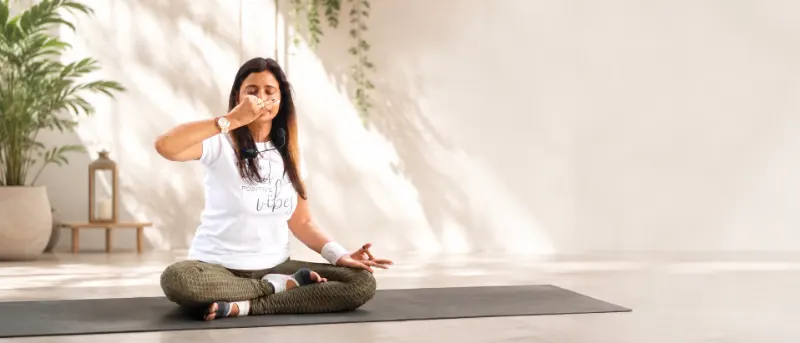
Most corporate professionals I meet assume that meaningful physical practice requires a yoga mat, a change of clothes, and an uninterrupted hour of free time. When I suggest moving while sitting at their desk, they often view it as a poor substitute for a full workout. They imagine someone attempting complicated postures in an office chair or doing performative stretches in front of colleagues. Desk yoga for corporate employees is a practical intervention designed for the specific physical strain of prolonged sitting, rather than a scaled-down version of an evening class. In my fifteen years of practice, I have seen that the habits people keep are the ones that fit into their existing routine without friction.
Consider what happens during a typical workday in an Indian office. You endure a long commute in heavy traffic, arrive at your desk, and sit down for the morning. By noon, your chin moves forward towards your monitor, your mid-back rounds, and your chest muscles tighten. Your breathing becomes shallow because your ribcage cannot expand fully. At the same time, your hip flexors remain locked in a shortened position while the muscles along your spine work constantly to keep you from slumping. By afternoon, stiffness in your neck and a dull ache in your lower back are predictable physical reactions to hours of static loading. Sitting still in an air-conditioned office for eight to ten hours puts continuous pressure on the spine and slows blood circulation through the lower body.
A common assumption among desk workers is that an aggressive workout at 7 PM will fix eight hours of total immobility. Working out in the evening has general health benefits, but it does not undo the physical toll of spending the entire day folded into an office chair. The human body adapts to the position it occupies most frequently. If you remain seated for eight hours every day, your nervous system accepts that compressed posture as your default baseline. Moving abruptly from hours of sitting straight into heavy weightlifting or high-intensity exercise can even strain cold, stiff tissues. Interruption during the workday matters far more than exertion after it. Breaking up long stretches of sitting with brief, focused movement keeps tissues supple, improves blood flow, and helps ease postural tension before it accumulates.
Simple movements linked directly to the breath form the foundation of an effective desk practice. This includes thoracic extension to open the chest, gentle seated spinal twists to restore mobility to the mid-back, wrist releases for typing strain, and targeted movements for the eyes. Staring at a computer screen for hours fatigues the small muscles around the eyes, which directly contributes to tension headaches and upper neck stiffness. Shifting your gaze away from the screen to a distant window every twenty minutes, paired with a few slow exhalations, relaxes the visual system and relieves stress in the upper body. These simple movements take just two or three minutes at your workstation, requiring no extra space, no special equipment, and no change of clothes.
For HR teams and corporate managers responsible for employee wellbeing, maintaining consistent engagement with health initiatives is a constant struggle. Organisations invest in annual medical checks or gym membership reimbursements, yet employees continue to experience fatigue, back pain, and burnout. The difficulty is that traditional wellness offerings do not integrate into the daily rhythm of office work. A wellness retreat happens once a year, and traveling to a gym requires extra effort after a long workday. A structured programme centred on desk yoga for corporate employees removes this friction. When leadership actively encourages short movement breaks during working hours, employees feel supported in taking three minutes to stretch their shoulders or rest their eyes.
The mental benefit of these micro-breaks is just as valuable as the physical release. Spending long hours responding to emails, reviewing spreadsheets, and sitting through back-to-back video calls keeps the nervous system in a state of continuous low-grade stress. Shallow breathing and tight shoulders signal threat to the brain, which drains mental endurance long before the end of the shift. Slow, measured exhalations combined with gentle movement help regulate the nervous system and restore mental clarity. This brief reset eases tension, helping employees finish their work day feeling clear-headed and focused rather than physically drained.
This is general wellness guidance and not medical advice, so if you are dealing with a specific injury, medical condition, or pregnancy, please consult your doctor before starting any new movement practice.
If you are ready to build a sustainable daily routine, you can book a private 60-minute session with me online or in Hyderabad, or get in touch to discuss how an introductory workshop can bring practical desk techniques to your team.

Founder of MindBodyZen. Certified yoga, fitness, Pilates, calisthenics, meditation and corporate wellness consultant with over fifteen years of practice — 1000 RYT (Yoga Alliance), Personal Trainer Level 4 and Advanced Diet & Nutrition certified. She works with corporate teams and private clients in Hyderabad, onsite across India, and online.